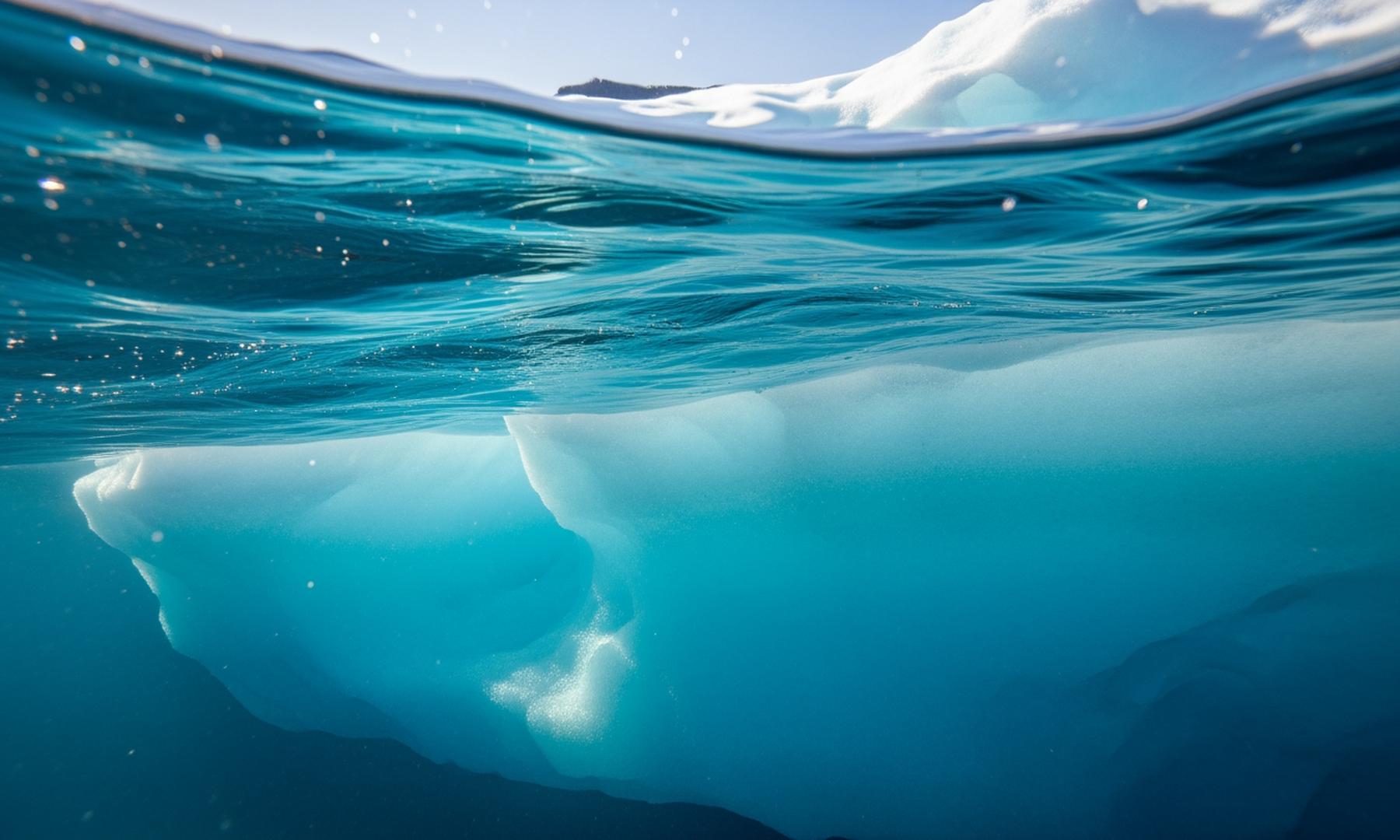
Underwater Waves Accelerate Glacier Melt in Greenland
• Massive underwater waves, triggered by icebergs, are accelerating glacier melt in Greenland.
• Fiber-optic technology detected these waves, which circulate warm water against glacier fronts.
• The melting of Greenland's glaciers could significantly raise global sea levels, impacting ocean circulation and ecosystems.
Underwater waves cause accelerated melting of glaciers
Researchers have uncovered a significant factor contributing to ice loss in Greenland: massive underwater waves beneath glaciers. These waves, triggered by falling icebergs, circulate warm water against the glacier fronts, accelerating melting. The discovery was made using fiber-optic technology near the Eqalorutsit Kangilliit Sermia glacier, which releases approximately 3.6 cubic kilometers of ice annually. The study highlights the calving multiplier effect, where the erosion of the glacier base leads to more ice breaking off, creating new waves and further melting.
Related News