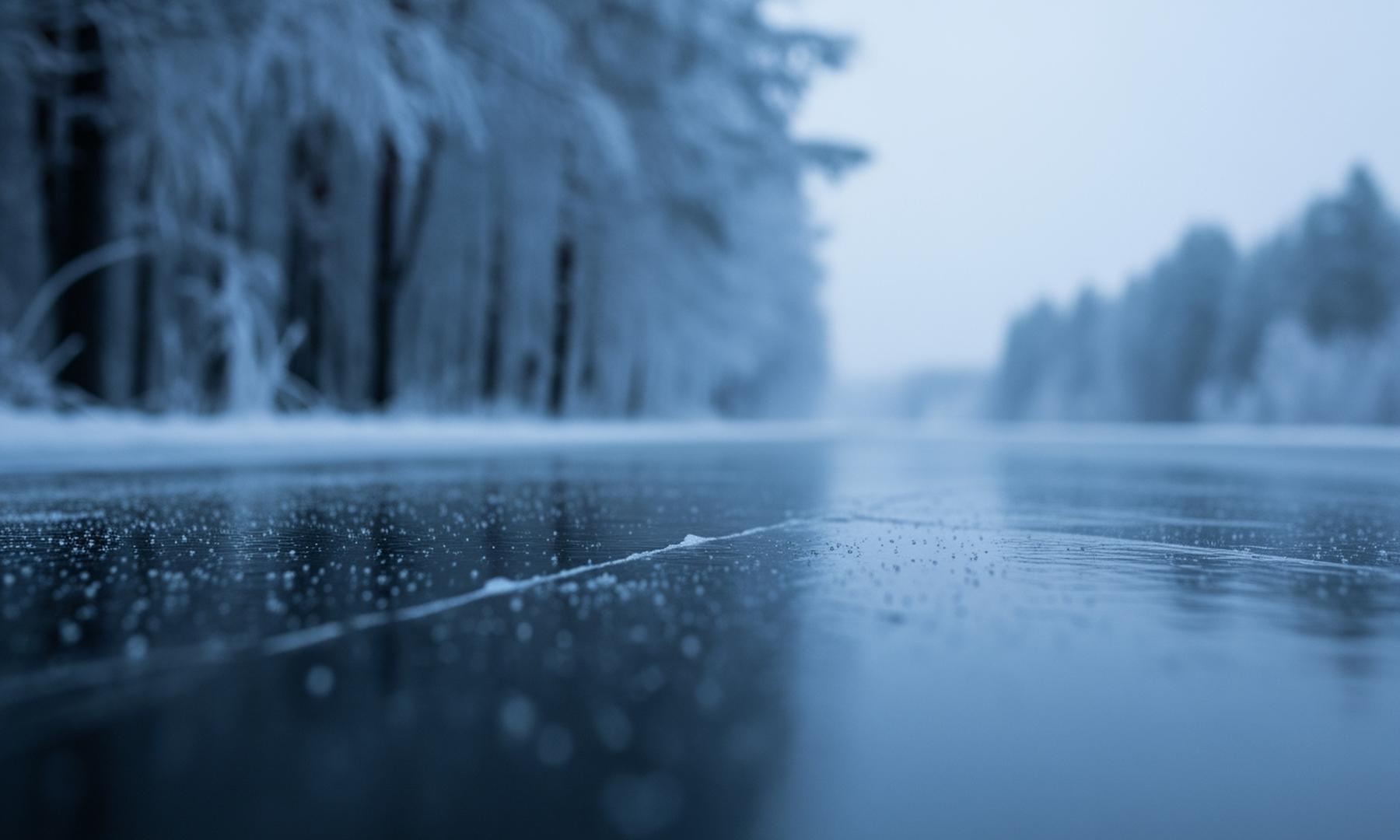
Black Ice Risk Poses Hazard for Drivers in Northern U.S.
• Un riesgo significativo de hielo negro afectará a los conductores en el norte de los Estados Unidos, especialmente en áreas con temperaturas bajo cero y precipitaciones recientes.
• El hielo negro se forma cuando la lluvia ligera, la llovizna o el deshielo de la nieve se vuelven a congelar en las carreteras, mezclándose con el asfalto y haciéndolo casi invisible.
• Los conductores deben reducir la velocidad, aumentar la distancia de seguimiento y evitar movimientos bruscos para evitar la pérdida de control en carreteras heladas.
Black ice poses significant risk to drivers
A significant risk of black ice is expected to affect drivers across the northern United States, particularly in areas experiencing sub-freezing temperatures and recent precipitation. Black ice, a thin coating of ice that forms on road surfaces, is often invisible to drivers, making it a hazard. It forms when light rain, drizzle, or melting snow refreezes on roadways. Because it is transparent, it blends seamlessly with the asphalt, making it nearly impossible to see. The northern United States, including states such as North Dakota, Minnesota, Wisconsin, Michigan, and parts of the Northeast, is particularly susceptible to black ice formation during the winter months.
Related News