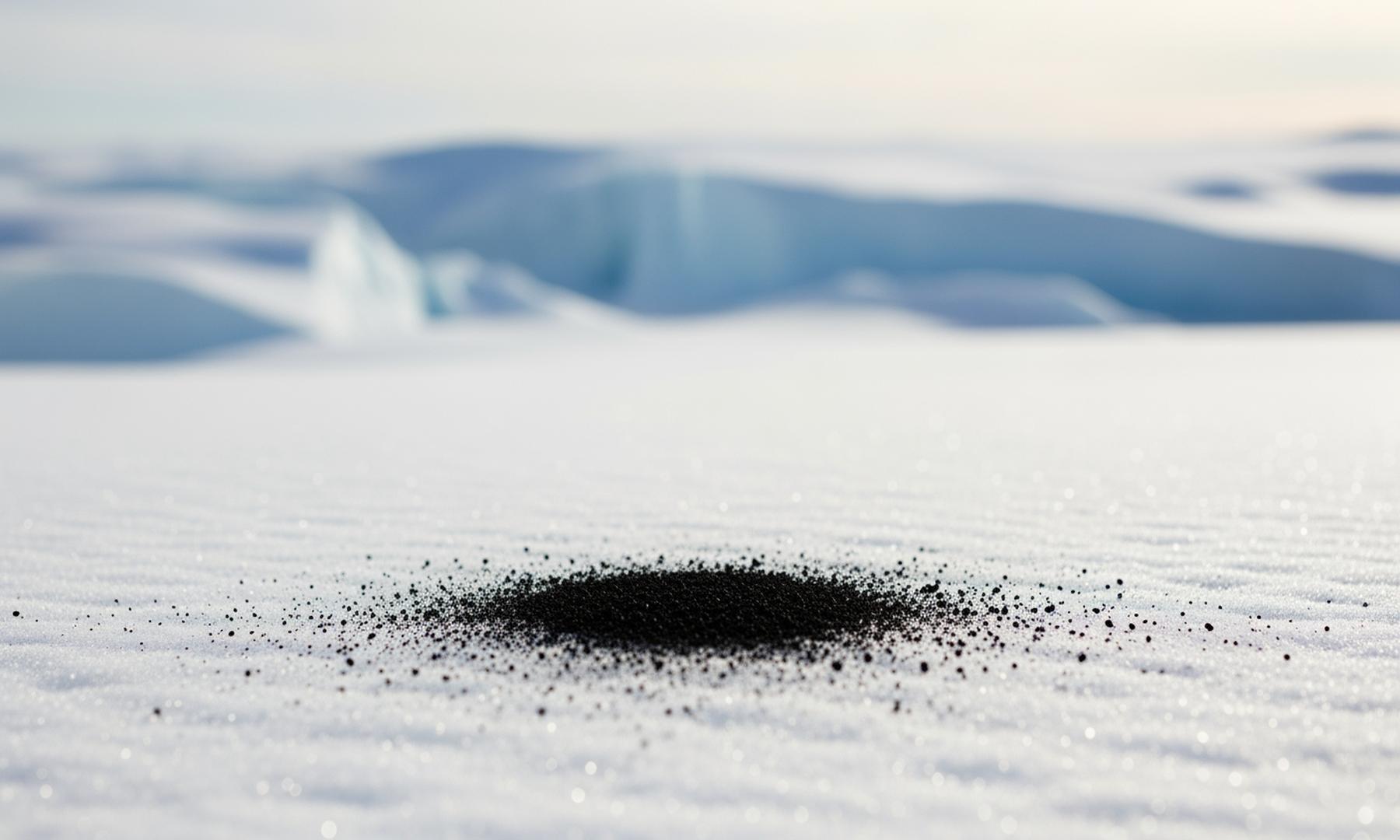
Black Carbon Pollution in Arctic Raises Environmental Concerns
• Increased shipping in the Arctic is causing higher black carbon emissions, accelerating sea ice melting.
• Black carbon reduces the ice's ability to reflect sunlight, intensifying warming in the Arctic.
• International regulators are considering 'polar fuels' to reduce pollution from ships operating in Arctic routes.
Arctic pollution increasing due to ship emissions
The Arctic region is experiencing increased pollution due to black carbon emissions from ships, which is exacerbating the melting of sea ice. As global temperatures rise, more ships are navigating previously inaccessible Arctic routes, leading to higher emissions of black carbon, a pollutant with a warming impact significantly greater than carbon dioxide. This soot, emitted by ships, reduces the ice's ability to reflect sunlight, accelerating the warming process in the Arctic. International shipping regulators are discussing measures to reduce these emissions by advocating for cleaner fuels. The proposal to use 'polar fuels' aims to mitigate the environmental impact by requiring ships north of the 60th parallel to use lighter fuels that emit less pollution.
Related News