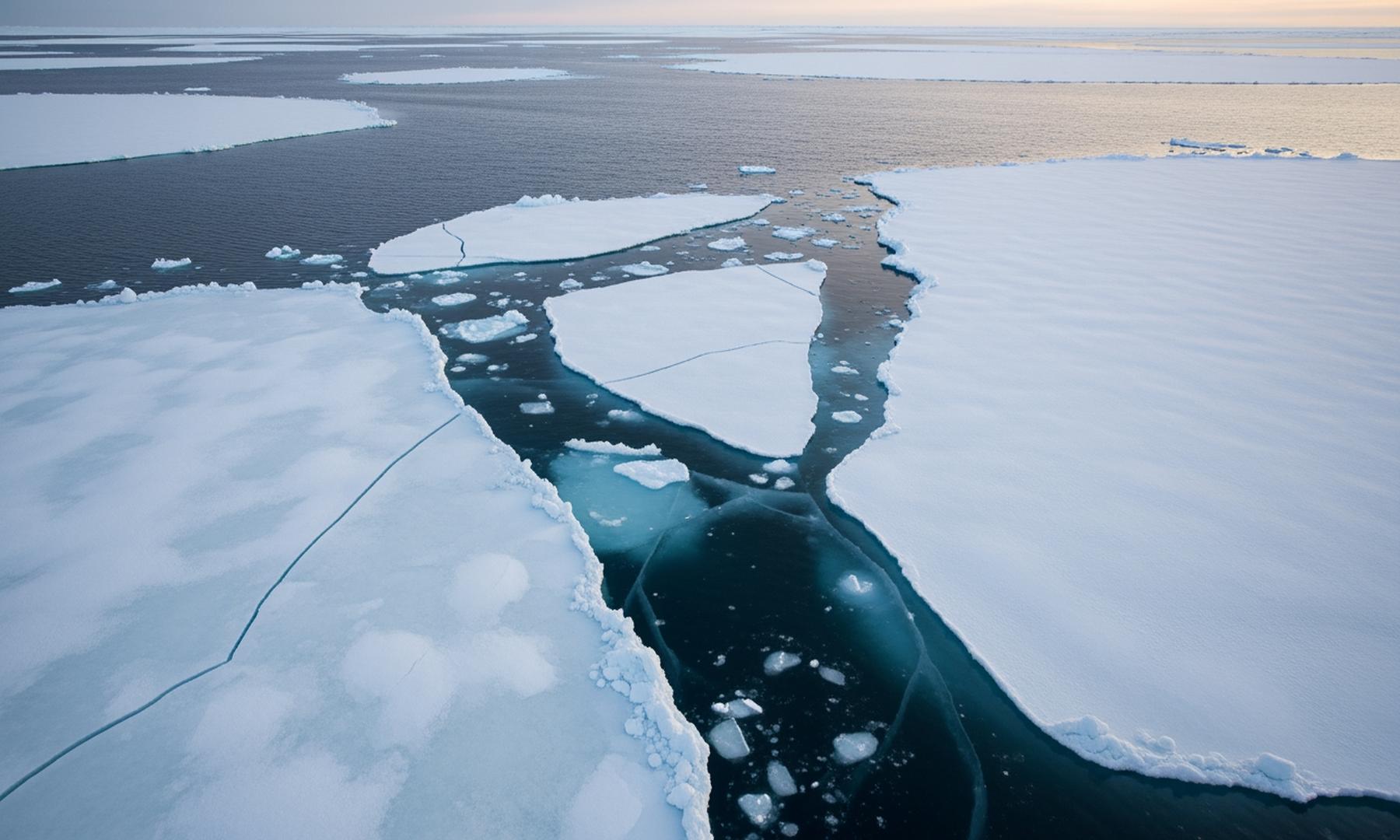
Arctic Winter Sea Ice Ties Record Low for Second Year
• Arctic winter sea ice extent tied a record low for the second consecutive year, reaching 5.52 million square miles on March 15,
• Current ice coverage is significantly below the 1981-2010 average, with notable thinning observed in the Barents Sea and the Sea of Okhotsk.
• Diminishing sea ice contributes to Arctic amplification, accelerating global warming and impacting weather patterns, sea levels, and marine ecosystems.
Arctic sea ice at record low again
Scientists from NASA and the National Snow and Ice Data Center (NSIDC) have reported that the extent of Arctic winter sea ice has tied a record low for the second consecutive year. On March 15, 2026, the maximum ice coverage was measured at 5.52 million square miles, closely matching the 2025 peak. This worrying trend highlights the profound impacts of climate change on Earth's polar regions. The current ice coverage is significantly lower than the average observed between 1981 and 2010, falling short by approximately half a million square miles. This decrease represents a substantial loss of ice and highlights a persistent downward trend in Arctic sea ice extent since satellite monitoring began in 1979.
Related News