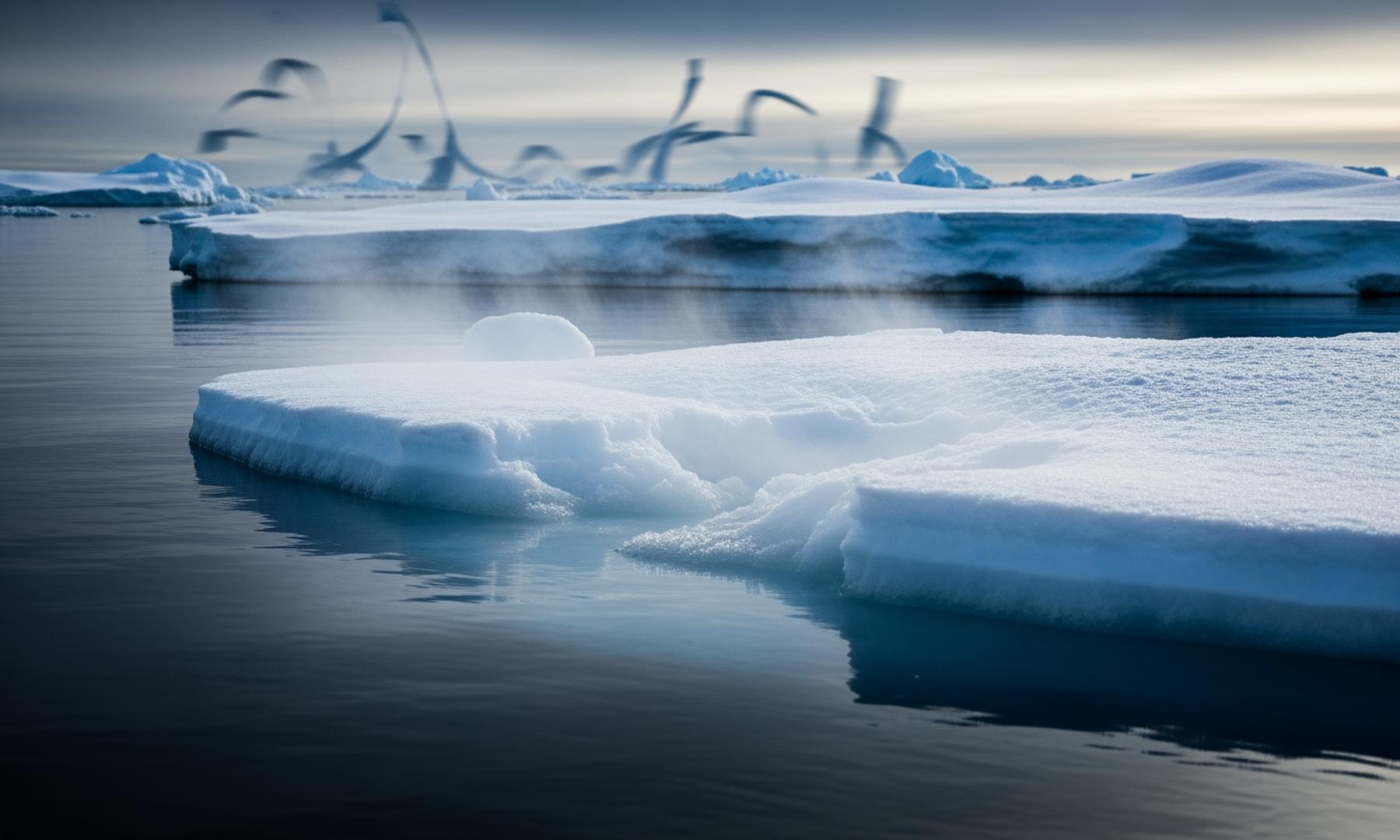
Antarctic Sea-Ice Decline Linked to Wind and Ocean Changes
• A new study links the decline in Antarctic sea ice to wind-driven changes in the Southern Ocean's temperature and salinity.
• From 2015, the upper ocean layers have warmed, and salinity has decreased, correlating with a reduction in sea ice area.
• Increased wind activity mixes ocean layers, bringing warmer waters to the surface and impacting sea ice formation and stability.
Wind-driven changes cause Antarctic sea ice decline
Recent research in Nature shows Antarctic sea ice decline due to wind-driven changes in the Southern Ocean's hydrography. The study analyzed over half a million hydrographic profiles from 2005 to 2022, revealing temperature and salinity shifts in the upper ocean layers. From 2005 to 2015, when sea ice area (SIA) was high, the ocean's mixed layer (ML) and Winter Water (WW) were cooler and fresher, while the Circumpolar Deep Water (CDW) warmed and became more saline. However, from 2015 onward, the upper ocean warmed and salinity decreased, coinciding with a decrease in SIA.
Related News