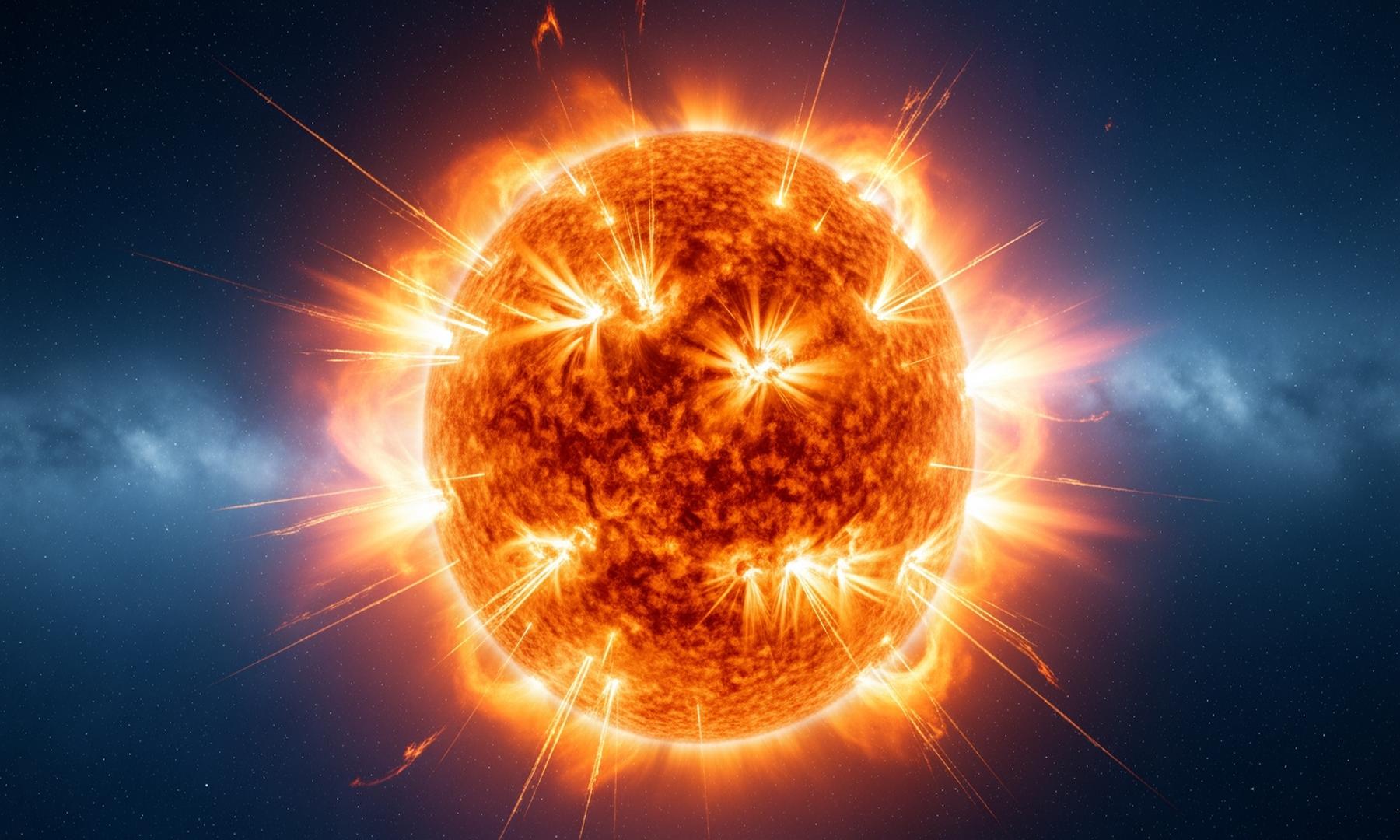
Understanding Solar Storms: Impacts and Risks in 2026
• Solar storms, including coronal mass ejections and solar flares, can disrupt power grids and satellite operations.
• The sun's 11-year cycle peaks around 2026, increasing the risk of significant solar storm impacts.
• Mitigation efforts include enhancing power grid resilience and improving space weather forecasting.
Solar storms threaten technology and infrastructure
Solar storms, characterized by violent ejections of solar material such as coronal mass ejections (CMEs) and solar flares, present a substantial threat to modern technology and infrastructure. As the sun approaches its solar maximum in 2026, the likelihood of powerful solar storms impacting Earth increases, necessitating thorough preparation and mitigation strategies. These storms can trigger geomagnetic disturbances by interacting with Earth's magnetic field, potentially disrupting power grids and causing widespread outages, reminiscent of the Carrington Event of 1859. Satellites are also at risk due to charged particles and electromagnetic radiation, which can damage electronic components, disrupt communication signals, and lead to complete failures, impacting navigation systems, weather forecasting, and global communication networks.
Related News