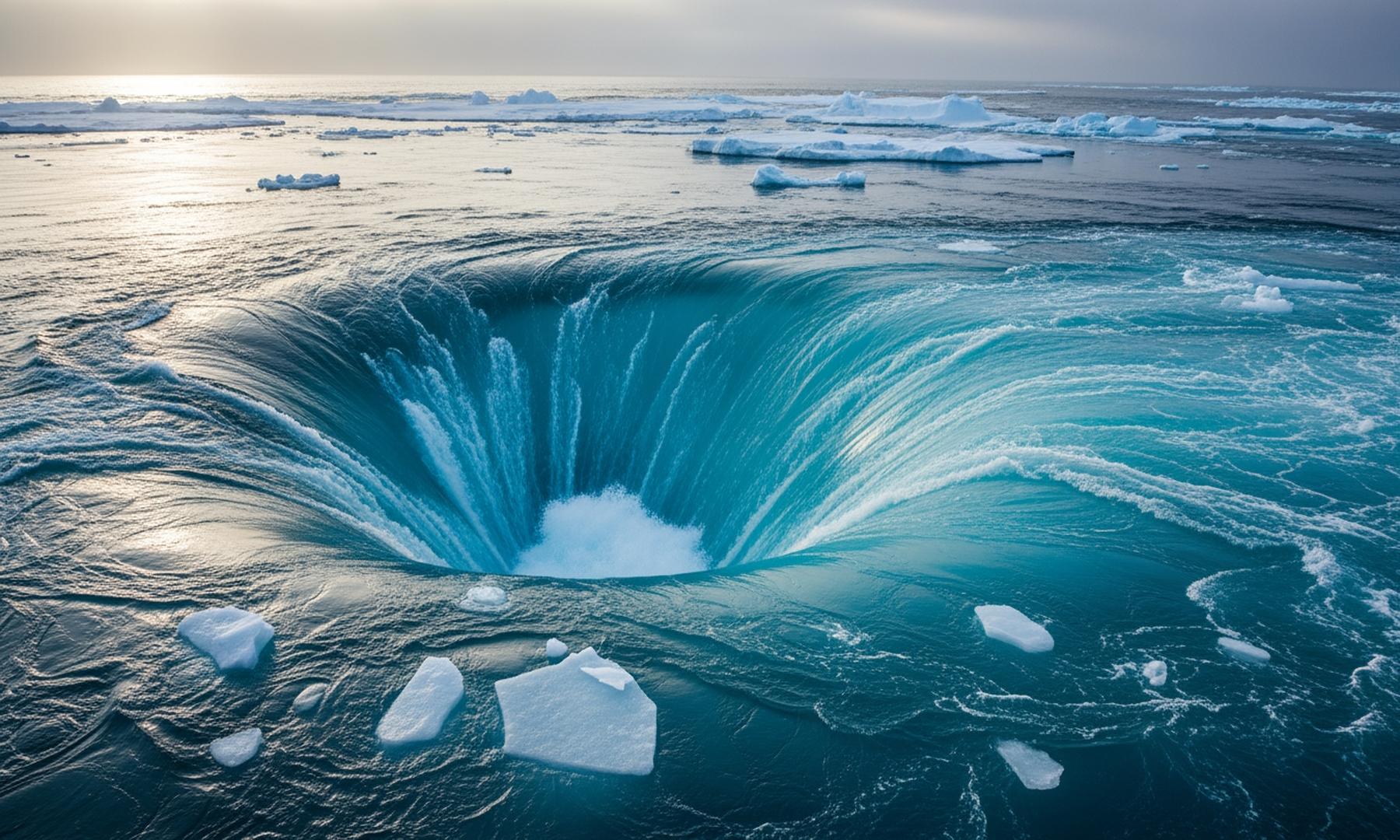
Shift in Gulf Stream Signals Potential Ocean Current Collapse
• The Gulf Stream, a key Atlantic current, is showing signs of instability, potentially leading to a collapse.
• Changes in ocean temperature and salinity, driven by global warming, are weakening the Gulf Stream.
• A collapse could cause colder winters in Europe, rising sea levels in North America, and disruption of marine ecosystems.
Gulf Stream showing signs of potential collapse
Recent observations indicate a concerning shift in the Gulf Stream, a vital Atlantic Ocean current responsible for regulating global climate. This current, which transports warm water from the Gulf of Mexico to the North Atlantic, is showing signs of potential collapse due to changes in ocean temperature and salinity levels, primarily driven by global warming and the melting of ice caps. The Gulf Stream is a crucial component of the Atlantic Meridional Overturning Circulation (AMOC), a system of currents that redistributes heat throughout the Atlantic Ocean. As warm water flows north, it cools, becomes saltier, and sinks, driving the circulation. However, the influx of freshwater from melting ice is reducing the salinity of surface water, hindering its ability to sink and weakening the AMOC and the Gulf Stream.
Related News